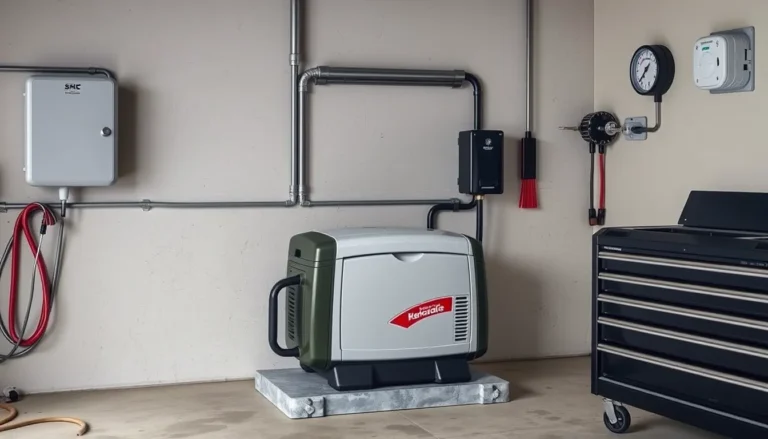
Choosing the right home generator requires prioritizing safety over raw power output. This guide helps you distinguish between portable units and permanent standby systems, clarifying the critical safety differences between them. You will learn how to avoid common installation errors that lead to carbon monoxide poisoning or electrical damage.
Instead of focusing solely on wattage, this article outlines the specific steps needed to secure your home safely. From calculating your actual load bank requirements to understanding the non-negotiable role of professional transfer switch installation, you will gain the practical knowledge necessary to make a secure, informed decision for your family.
Understanding the Two Main Types of Home Generators
- Standby generator: A permanent fixture hardwired directly into your home’s electrical system. These units operate automatically during power outages, seamlessly switching power sources without user intervention. They are designed for long-term, continuous operation and integrate deeply with your existing infrastructure.
- Portable generator: A movable unit that requires manual setup, fueling, and connection. Users must physically move the equipment, connect extension cords or temporary wiring, and manage runtime manually. While flexible, this type relies heavily on consistent, correct human behavior to function safely.
The safety profiles of these two systems differ significantly. Standby units are engineered for controlled integration, featuring built-in safety mechanisms like automatic transfer switches that prevent backfeeding. Their fixed placement allows for proper ventilation and secure fuel connections, reducing the likelihood of installation errors.
In contrast, portable generators carry higher risks associated with user error. Improper placement, inadequate ventilation, or incorrect wiring can lead to carbon monoxide poisoning or electrical hazards. Understanding these fundamental distinctions is critical before evaluating specific models, as the operational context dictates the safety protocols required for each.
Calculating the Right Power Capacity for Your Needs
Power capacity is measured in two distinct ways: running watts and starting watts. Running watts represent the sustained energy output required to keep an appliance operating once it is active. Starting watts, however, refer to the higher surge of power needed to spin up motors or engage compressors at startup. For example, a refrigerator uses a higher amount of starting watts than running watts. Ignoring this spike can cause a generator to trip or fail to start essential loads.
To determine your needs, create a detailed inventory of appliances. Separate them into two categories: essential and non-essential. Essential circuits typically include the refrigerator, HVAC system, sump pump, and basic lighting. Non-essential items usually consist of entertainment systems, gaming consoles, and decorative lighting. Calculate the total running watts for all essential items. Then, identify the single highest starting watt requirement among those items and add it to the total running sum. This figure represents your minimum required capacity.
While efficiency is important, oversizing the unit is safer than undersizing it. An undersized generator risks overload, which can damage equipment or cause the system to shut down during a crisis. Select a model with a capacity slightly above your calculated total to ensure stable operation and account for potential fluctuations in demand.
The Critical Role of the Transfer Switch
A transfer switch is the essential safety link between your generator and your home’s electrical system. It is not an optional accessory; it is a non-negotiable component for any safe installation. Its primary function is to physically isolate your home from the utility grid. When the grid fails, the switch disconnects your house from the public lines and connects it to the generator. When power is restored, it automatically switches back, ensuring your generator never feeds power into the grid.
This isolation protects against backfeeding, a dangerous practice where a generator is plugged directly into a wall outlet. Backfeeding sends electricity through the utility lines, creating a lethal hazard for utility workers who assume the lines are de-energized. It also risks electrical fires due to improper load distribution. While portable generators are often used with individual appliances, any permanent or semi-permanent setup requires a transfer switch to manage the full load safely.
Using the correct switch ensures that only the selected circuits receive power, preventing overload and maintaining system integrity. It acts as a gatekeeper, ensuring that power flows only where it is intended and safely cuts off the connection to the outside world. Ignoring this requirement endangers lives and voids insurance coverage. Always verify that your generator and switch are compatible before installation.
Placement and Ventilation: Avoiding Carbon Monoxide Hazards
< h2>Placement and Ventilation: Avoiding Carbon Monoxide Hazards
Carbon monoxide is an odorless, colorless gas that poses a severe, invisible threat. Because it binds to hemoglobin more readily than oxygen, exposure can lead to rapid incapacitation and death. This makes proper placement the single most critical safety factor when selecting a standby or portable generator.
Never operate a generator in a garage, basement, or any enclosed space. Even with the door open, CO accumulates quickly in these areas. The unit must be positioned outdoors, far from windows, doors, and air intakes to prevent fumes from being drawn into the living space. Maintain a safe distance from walls and vents to allow for adequate airflow and heat dissipation.
Installing a carbon monoxide detector is non-negotiable. Place units near sleeping areas and within the same room as the generator installation. These devices provide an early warning if fumes infiltrate the structure, giving you time to move to fresh air. Regularly test these alarms to ensure they function correctly. By treating ventilation as a primary design constraint rather than an afterthought, you eliminate the most common cause of generator-related fatalities.
Fuel Safety and Storage Protocols
Fuel selection dictates your safety protocols. Gasoline is highly volatile and has a limited shelf life, making it unsuitable for long-term storage without stabilizer. Diesel is less volatile but can harbor microbial growth if stored improperly. Propane is the safest option for long-term storage, as it does not degrade, but it requires strict adherence to clearance distances from walls, windows, and ignition sources.
Use only approved, vented containers specifically rated for the fuel type you are storing. Never use plastic jugs or improvised vessels, which can leak or explode under pressure. If you must store large quantities of gasoline or diesel, a fire-rated storage cabinet or dedicated area is essential to contain potential spills and reduce fire risk. Keep all fuel away from heat sources, electrical equipment, and open flames. For propane systems, ensure tanks meet local code requirements for distance from structures and ventilation paths. Regularly inspect lines and connections for leaks, using a soapy water solution to detect bubbles, which indicate gas escape. Proper fuel management prevents fires and ensures your generator remains a reliable backup rather than a hazard.
Professional Installation and Code Compliance
While homeowners can operate a Portable generator with basic caution, installing a Standby generator or a Transfer switch is strictly professional territory. Attempting to hardwire these systems yourself risks catastrophic Backfeeding into the utility grid, which can electrocute line workers and damage your equipment. A licensed electrician ensures all connections meet the required Wattage and Starting watts specifications safely.
Local building and electrical codes vary significantly by region. Ignoring these standards can void your homeowner’s insurance and fail mandatory inspections. Permits are not bureaucratic hurdles; they are legal safeguards that verify your setup prevents electrical fires and gas leaks. An inspector provides the final sign-off confirming the system is safe for permanent use.
Beyond installation, long-term safety depends on regular upkeep. Professional maintenance schedules include checking fuel lines, testing the automatic start mechanism, and ensuring the Carbon monoxide detector remains functional. These routine services catch minor issues before they become dangerous failures, preserving the reliability of your backup power system for years to come.